
Going racing is the dream. Paying for it? Slightly less glamorous.
The calendar is ready. The helmet is too. Now comes the question behind almost every racing project: how do you fund the season?
After more than 60 years working with drivers and watching racing careers take shape, one thing is clear: getting to the grid takes preparation off track too.
Sponsors, in-kind support, personal networks, family support and personal investment can all play a part. Here are five money moves to get started.
1. Know the real number
The price of the seat gives you a first idea. Then comes everything around it.
Split your expenses into a few main areas: racing and track time, equipment, travel and accommodation, driver preparation, communication, plus some room for the unexpected.
Three things matter: the total cost of the season, what is already covered and what is left to secure. Once you know the gap, the strategy gets much clearer. You know who to approach, how many partners you may need and what kind of contribution actually moves the needle.
And yes, a spreadsheet will probably make an appearance.

2. Bring the bill down
Some costs can be covered directly.
An equipment supplier can provide racing gear. A company can help with travel. A hotel can cover accommodation. Photography, video or physical preparation can also become part of a partnership.
Go through your expenses and look for natural connections with businesses around you. Several smaller contributions can make a real difference over a full season. And leave more of the budget where you want it: on track.

3. Give companies a reason to join
Motorsport gives companies plenty to work with: visibility, social media content, circuit invitations, client experiences, events or employee activations.
Look at the company, its audience and how it communicates. Then think about what your racing season could offer them.
A local restaurant, an engineering company and a clothing brand will have different expectations. Your proposal should reflect that.
The sticker on the car? Great.
The idea behind it? Even better.
And you already have plenty of tools to start showing what you can offer. A smartphone can capture race weekend content, behind the scenes moments or short videos. Canva can help create a sponsor deck, social media posts, race recaps or printed flyers to hand out to local businesses and potential partners. For drivers who are more comfortable with design, InDesign or Photoshop can take presentations, media kits and partner visuals one step further.
These tools also give future partners a preview of what you could create for them. A clean flyer shows how you can present their brand. A professional Instagram post shows how their visibility could live online. A well designed sponsor presentation shows that you already understand communication, image and value.
Before they join the project, show them what being part of it could look like.

4. Start where the doors are open
Your first contacts are often closer than you think.
Local businesses, entrepreneurs, professional contacts, family connections or people you have met along the way can all become starting points.
Make a list. Talk about your racing plans. Ask for introductions. One meeting can lead to another, and a first partner can help open the next door. Personalise every approach. Know who you are contacting and why your project could make sense for them.
Three hundred copy-paste emails are still three hundred copy-paste emails.
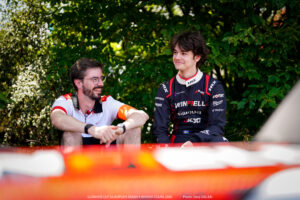
5. Put the pieces together
Think of your racing budget as a puzzle.
One partner covers part of the season, another supports travel, an equipment supplier provides your gear, while personal or family support completes another piece.
Piece by piece, the season takes shape.
Once partners are involved, keep them close to the journey. Share results, photos, videos and race weekend updates. Invite them to the circuit when possible and let them experience what their support is helping to build.
A strong partnership this season can already help fund the next one.
Bonus move: Look beyond the cockpit
Funding a season also calls for skills away from the track, from communication and networking to marketing and presenting your racing project.
A professional presence on social media can become part of that package too. More and more drivers use dedicated Instagram pages to share results, training, race weekends and partner content. A clear and active profile adds credibility to the project and gives potential sponsors an immediate view of the driver, the racing programme and the visibility they could become part of.
That wider understanding is also part of the F4 Training Camp, alongside driving, coaching, physical and mental preparation, simulator work and data analysis.
Ready to build the full driver package? Discover the F4 Training Camp.
